Small Ball Means “Move the Ball the Easy Way”
In flag football, “small ball” is a style of offense built around quick, short passes and clean execution, usually seen in 5on5 or 7on7 flag football.
Instead of hunting for deep shots every drive, a small ball team is happy to take steady gains, keep the offense on schedule, and march down the field in smaller chunks.
Think of it like this: if an offense can reliably gain a few yards at a time, it can control the game without needing risky throws.
What Small Ball Looks Like on the Field
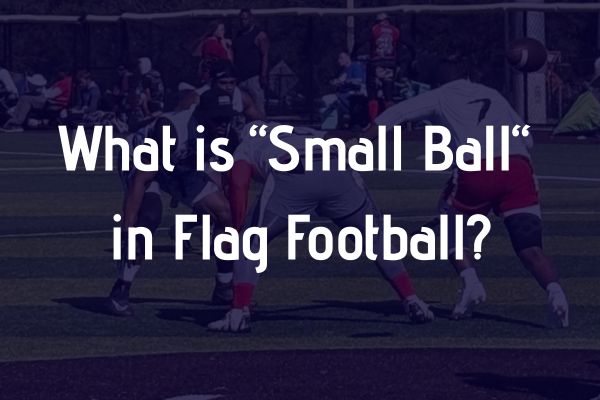
Small ball usually shows up as quick throws and fast decisions.
The quarterback gets the ball out early, the receiver catches it in space, and the play turns into a quick “catch-and-go” situation.
Common small ball throws include:
- Slants (quick inside break)
- Hitches and hooks (stop routes to get easy completions)
- Shallow crosses (receivers moving across the field)
- Quick outs (easy timing throws)
- Checkdowns (safe throws when nothing deep is open)
The main goal is simple: complete passes, stay ahead of the sticks, and keep the drive alive.
Why Small Ball Works in Flag Football
Small ball is popular because it gives offenses a reliable way to win games, especially in competitive leagues and tournaments.
Here are the biggest reasons teams lean into it.
1) High completion rate
Short throws are easier to complete. When the ball comes out quickly, there’s less time for defenders to make a play on it.
2) Drives stay under control
Small ball offenses usually avoid “all-or-nothing” football. They are built to pick up first downs, one at a time, without forcing the big play.
3) Better clock control
In many leagues, keeping the ball in-bounds and consistently completing short passes can drain the clock and limit the opponent’s possessions.
4) Fewer turnovers
Deep balls lead to more contested catches and more interceptions. Small ball lowers that risk by sticking to safer windows and cleaner reads.
5) It fits the passing clock
Many flag football formats use a passing clock (often around 7 seconds). Small ball is built for fast decisions and quick separation, which matches that environment perfectly.
Small Ball vs Big Play Offense
Not every team plays small ball. Some teams prefer a “big play” style where they take more deep shots and try to score fast.
Here’s the easiest way to compare them.
Small Ball Offense
- Wins with consistency and high-percentage throws
- Moves the ball in chunks and stacks first downs
- Focuses on execution more than highlight plays
- Limits risk and avoids turnovers
Big Play Offense
- Wins with explosive plays and quick strikes
- Takes more deep shots and attacks downfield
- Relies on matchups and speed advantages
- Accepts more risk for bigger rewards
Neither style is automatically “better.” The best teams usually have both in their bag. They can play small ball to stay on schedule, then hit a big play when the defense starts cheating up.
The Most Important Skill in Small Ball
Small ball only works if the routes are sharp and on time. You can learn more about running better routes for free when you sign up for FlagPoint.
Receivers have to create separation quickly, because the quarterback is often throwing on rhythm. That means the footwork, spacing, and timing all have to be clean.
It also puts pressure on ball carriers to avoid flags in tight spaces. If you can make the first defender miss, small plays turn into big gains.
Quick Note: “Small Ball” Can Mean Something Else in Youth Football
In some youth settings, you might hear “small ball” used to describe a smaller size football (like Pee Wee or Junior) that helps kids grip and throw better.
But in adult and modern day style competitive flag football, “small ball” almost always means the short-passing, possession-style offense described above.
Final Thoughts: Small Ball Is a Winning Style When It’s Done Right
Small ball in flag football is about playing efficient offense, stacking completions, and controlling the game without forcing risky throws.
If your team can execute short routes, protect the ball, and consistently move the chains, small ball can be one of the hardest styles to stop.
Sign Up on FlagPoint to connect with players, teams, and leagues that match your style of play.
Frequently Asked Questions
Is small ball better than a big play offense?
Small ball is safer and more consistent, but big play offenses score faster. The best teams can do both.
Does small ball work in 5v5 and 7v7?
Yes. It is especially effective in leagues with a passing clock where quick decisions are critical.